Cello Fingerboard Map & Note Locations
Understanding the cello fingerboard is essential for correct intonation. Unlike instruments with frets, the cello requires precise finger placement based on physical distance and auditory feedback. This guide focuses on the First Position, which is the foundation for every beginner cellist.
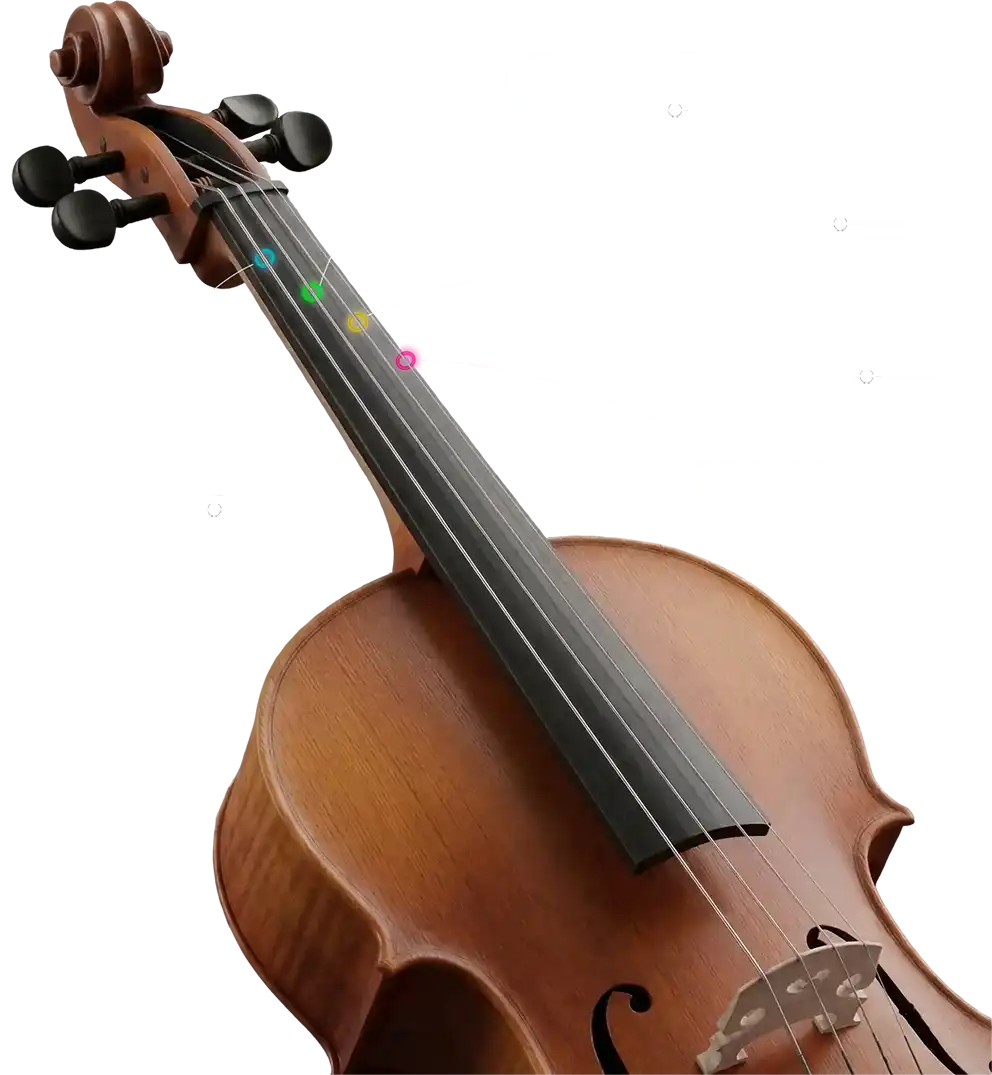
Figure 1: Visual mapping of notes from the nut to the end of the first position.
Note Positions by String
In the first position, your hand is located near the top of the neck (the nut). Below are the natural notes (no sharps or flats) found on each string using standard fingering (1, 3, 4):
A String (1st)
Open: A
1st Finger: B
3rd Finger: C#
4th Finger: D
D String (2nd)
Open: D
1st Finger: E
3rd Finger: F#
4th Finger: G
G String (3rd)
Open: G
1st Finger: A
3rd Finger: B
4th Finger: C
C String (4th)
Open: C
1st Finger: D
3rd Finger: E
4th Finger: F
Whole Steps and Half Steps
Physical distance on the fingerboard corresponds to musical intervals. On a full-size (4/4) cello:
- Whole Step: Fingers 1 and 3, or 3 and 4 (in extended position), have a wider gap.
- Half Step: Fingers 2 and 3, or 3 and 4, are placed closely together.
Use the visual map above as a static reference to memorize where these intervals occur across the four strings.
Understanding Extension
While the standard first position uses a "closed" hand shape, many pieces require an extension. An extension involves reaching back with the first finger or forward with the others to reach accidental notes like Bb or Eb without moving the entire hand position.
Explore More Articles