
CelloEasy - Free Online Cello Tuner
Welcome to the
CelloEasy Tuner
Click to allow microphone access. We will listen to your cello and detect the exact pitch to help you tune perfectly.
Live Sheet Music
Reference
CelloEasy translates every note you play directly onto the bass clef staff. This real-time visual reference helps you connect the pitch you hear with the music you read!
Interactive
Fingerboard
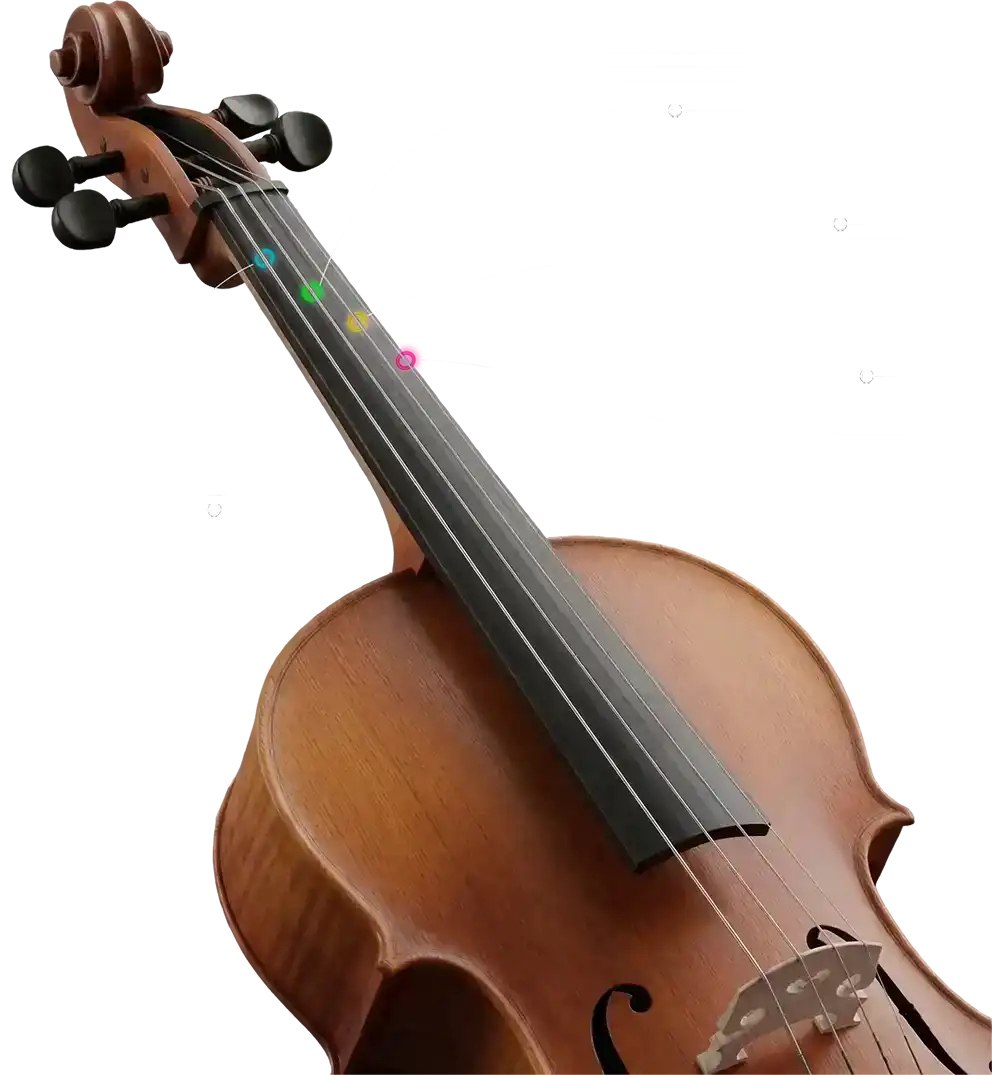
Tap any string to hear a pure reference tone. Toggle the Live Tracking mode to see exactly where your finger is placed in real-time!

The Complete Guide to Cello Tuning, Mechanics, and Daily Practice
Mastering the cello is a lifelong journey that requires immense patience, precise physical coordination, and, above all, a highly trained musical ear. Because the cello is a fretless string instrument, your fingers alone must find the exact millimeter on the fingerboard to produce the perfect pitch. There are no visual frets to guide you, which makes accurate tuning not just a preliminary chore, but the absolute foundation of your entire musical development. If your instrument is out of tune, your muscle memory will map the wrong physical locations for the notes, delaying your progress.
To help you achieve flawless intonation from day one, we developed the CelloEasy free online tuner. This comprehensive guide will walk you through exactly how to use every advanced feature of our interactive platform and provide essential, expert-level tips to optimize your daily practice routine, ensuring you build a rock-solid technical foundation.
Understanding the CelloEasy Tuning Engine
Our platform is divided into three highly interactive, real-time visual panels designed to bridge the gap between what you hear, what you read on the page, and where you place your fingers on the instrument. Here is how to maximize your use of the tool:
1. The Precision Chromatic Meter: When you click "START" and allow microphone access, our audio engine begins listening with high-fidelity pitch detection.
- Audio Input Bar: Measures captured volume. Play in a quiet room to isolate your cello's resonance.
- Pitch Detection: Instantly displays the scientific note name (e.g., C2 or A3) and frequency in Hertz (Hz).
- The Needle & Cents: If the needle pulls left (negative), your string is flat; if right (positive), it's sharp. Aim for zero cents until the interface lights up green (Standard A=440Hz).
2. Live Sheet Music Reference: Beginner cellists often struggle to connect sound to written sheet music. Our second panel plots the detected pitch directly onto the Bass Clef in real-time. This passively trains your brain to recognize notes on the staff lines and spaces before you even open a method book.
3. Interactive Fingerboard & Live Tracking: This panel features a 3D render of a cello neck with two educational features:
- Pure Reference Tones: Click any string (C2, G2, D3, A3) to hear a perfectly synthesized note. Match this sound with your bow to develop relative pitch.
- Live Tracking Mode: Illuminates the exact string and position of the note you are playing, acting as a virtual mirror for spatial geography.
Practical Tips & Expert Cello Tuning Guide
What are the exact frequencies for cello strings?
The standard tuning for a cello (from lowest to highest) is C2 (65.41 Hz), G2 (98.00 Hz), D3 (146.83 Hz), and A3 (220.00 Hz). These are the exact scientific pitch frequencies for A=440Hz concert pitch:
| String | Note | Frequency (Hz) |
|---|---|---|
| 1st (Highest) | A3 | 220.00 Hz |
| 2nd | D3 | 146.83 Hz |
| 3rd | G2 | 98.00 Hz |
| 4th (Lowest) | C2 | 65.41 Hz |
Mechanical Tuning Tip: Always use your fine tuners for minor adjustments. Use the wooden pegs only if the string is completely loose, pushing inward as you turn to lock them using friction.
Why is it essential to tune the cello before every practice?
Playing with an out-of-tune instrument actively harms the development of your pitch perception. Additionally, cello strings are highly sensitive to temperature and humidity, causing the wood and strings to expand or contract. Tuning before drawing the bow ensures your brain memorizes the exact intonation of each note.
How long should I practice the cello every day?
For beginners, consistency beats exhaustion. Start with focused sessions of 20 to 30 minutes daily to build hand muscles and calluses without injury. As your posture stabilizes, you can gradually increase to 1 to 2 hours a day, taking breaks every 30 minutes to stretch.
How should I organize my practice routine?
A structured routine prevents mindless playing. Divide your session into three parts:
- Warm-up (20%): Check tuning and practice open string bowing for a warm, resonant tone.
- Technique (30%): Scales, arpeggios, and shifting exercises to build your intonation foundation.
- Repertoire (50%): Musical pieces. Isolate difficult measures and practice them in loops rather than just playing start to finish.
What is the correct posture for playing the cello?
Sit on the front edge of a firm chair with both feet planted firmly. Adjust the cello endpin so the instrument leans slightly left, with the C string peg near your left ear. Keep your back straight and shoulders relaxed. Transfer the natural weight of your arm into the string rather than squeezing with your fingers.
Essential care before putting your instrument away
Wipe off white rosin dust from the strings and soundboard with a dry microfiber cloth to prevent varnish damage. Always loosen the bow hair by turning the tension screw counter-clockwise to avoid warping the wood or carbon fiber stick.